The MANDATE & CONTEXT
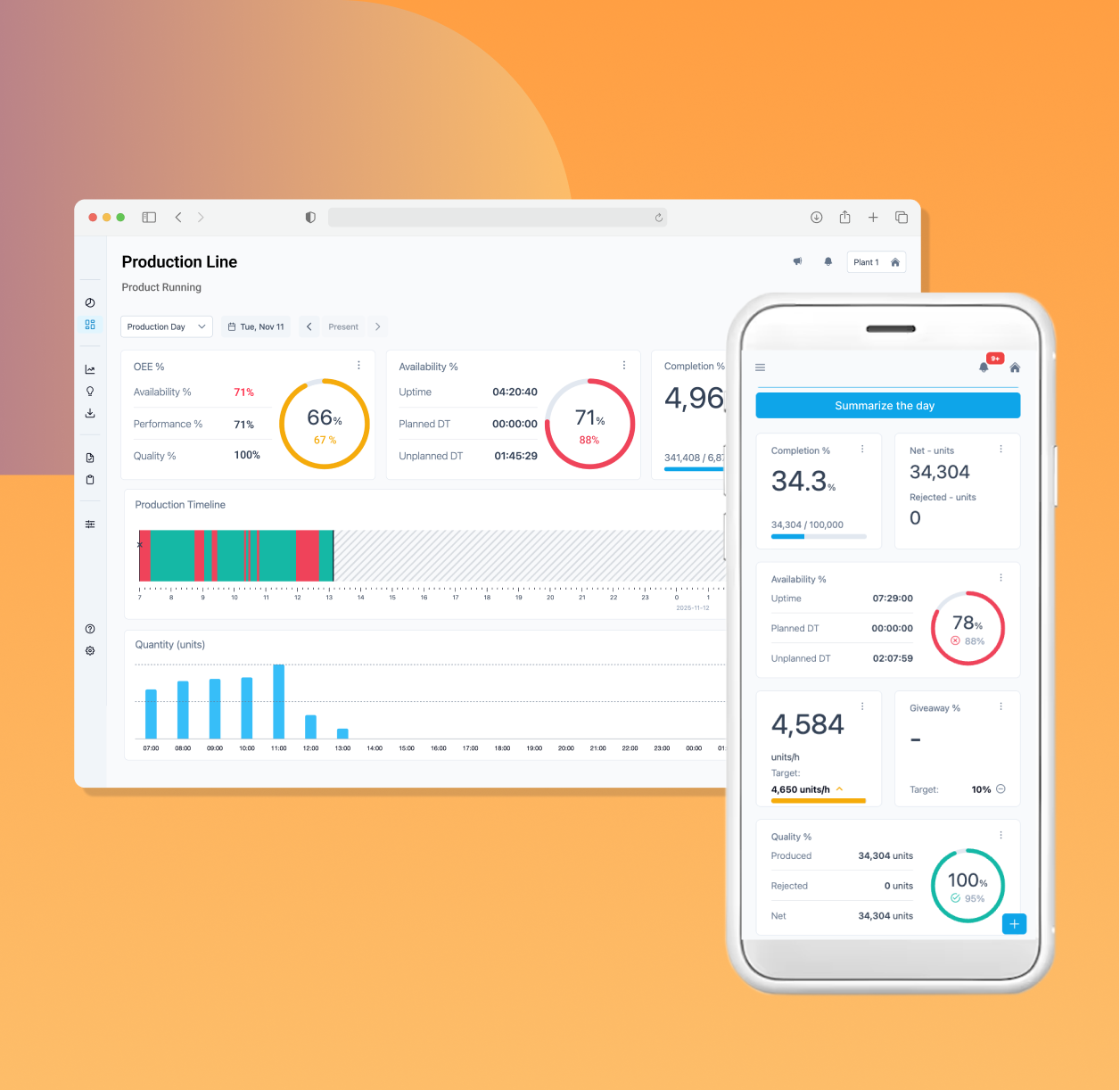
Worximity is a SaaS company that helps manufacturing teams improve production performance through real-time data and analytics.
WX already had an analytics platform, but adoption was low. There was no visibility into product usage, and limited understanding of user sentiment. As a result, stakeholders aimed to redesign the platform to improve adoption.
My Role: As Product Designer, I led the project end-to-end—from user research, analytics platform evaluation, and insight synthesis to UX/UI redesign, data visualization standards, workshops, prototyping, and development handoff. I also led stakeholder presentations and the post-launch strategy to drive product awareness and adoption.
Research & Discovery
1. USaBILITY AUDIT
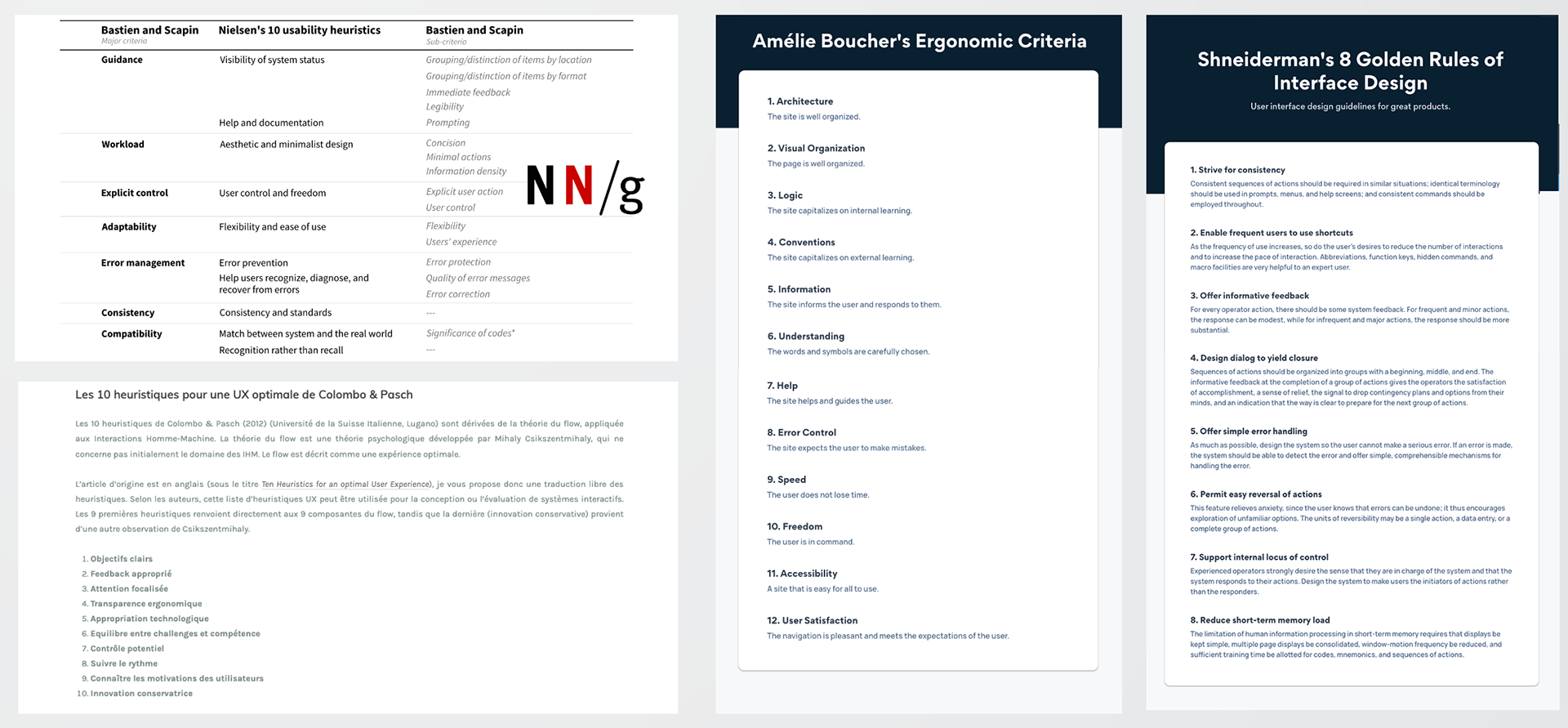
The first stop was to conduct a usability audit using Heurio to evaluate the existing product experience against UX best practices. Analyzed pages, workflows, and interface elements to identify usability issues and their root causes.
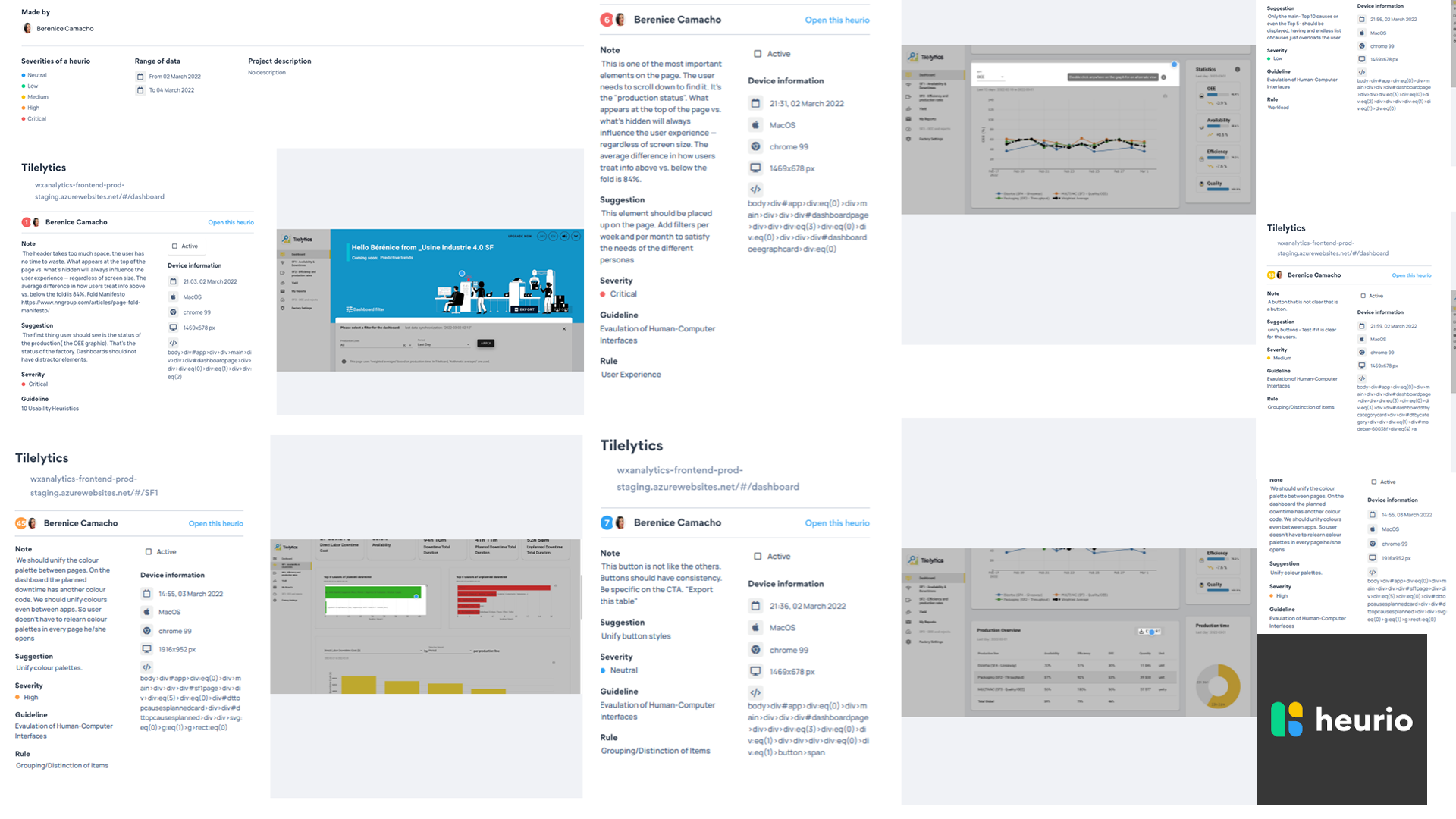
Using Heurio’s framework, issues were objectively mapped to specific UX principles and heuristics that were not being followed, helping prioritize actionable improvements.”
2. Start Collecting Usage Data
The company had no visibility into how the platform was used. So Qualitative and Quantitative Research were used to start finding the platform main problems.
Survey
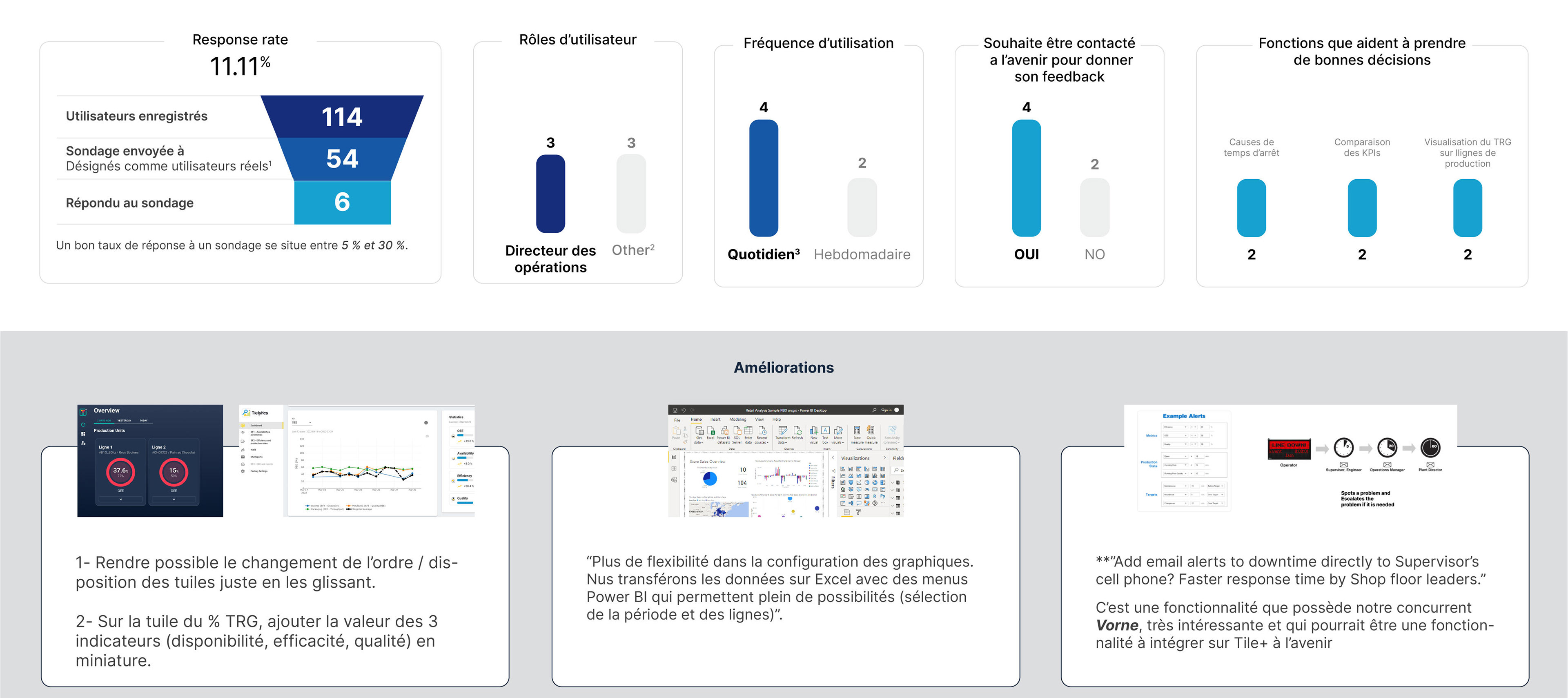
A concise 4-question multiple-choice survey was distributed to users via email to gather early product feedback and usability insights. At the time, the platform did not yet support in-app communication or integrated user analytics and survey tools.
USER INTERVIEWS

Through interviews with the users, several patterns emerged:
- Lack of Awareness: Some users didn’t even know the Analytics platform existed.
- Many users preferred to export data to, cross-reference with external sources, manipulate numbers manually, build their own comparisons
- Lack of Trust, Users reported differences in calculations in the realtime vs analytics platforms, creating uncertainty about calculation logic and confusion about what they were actually looking at.
- Not Responsive - Mobile was not supported
THE DISCOVERIES
ZERO AWARENESS OF THE PLATFORM.
Many users were simply unaware that the analytics platform existed, relying almost exclusively on the real-time platform to monitor production.
At the same time, Worximity lacked a data-driven approach to understanding user behavior. Without an analytics platform in place, we had limited visibility into how users navigated the product, which features they used, and where they encountered friction—making it difficult to identify opportunities and prioritize improvements based on real user data.
NOT a WELL DEFINED USER PERSONA.
Before the Mandate it was blurry who should be using the Platform, the economic Buyer CFO, Finance, the Continuous Improvement team, the Director of Operations or the Supervisor. After the User Interviews we were able to create a Persona for the Software and It's Journey.
CUSTOMER JURNEY MAPPING
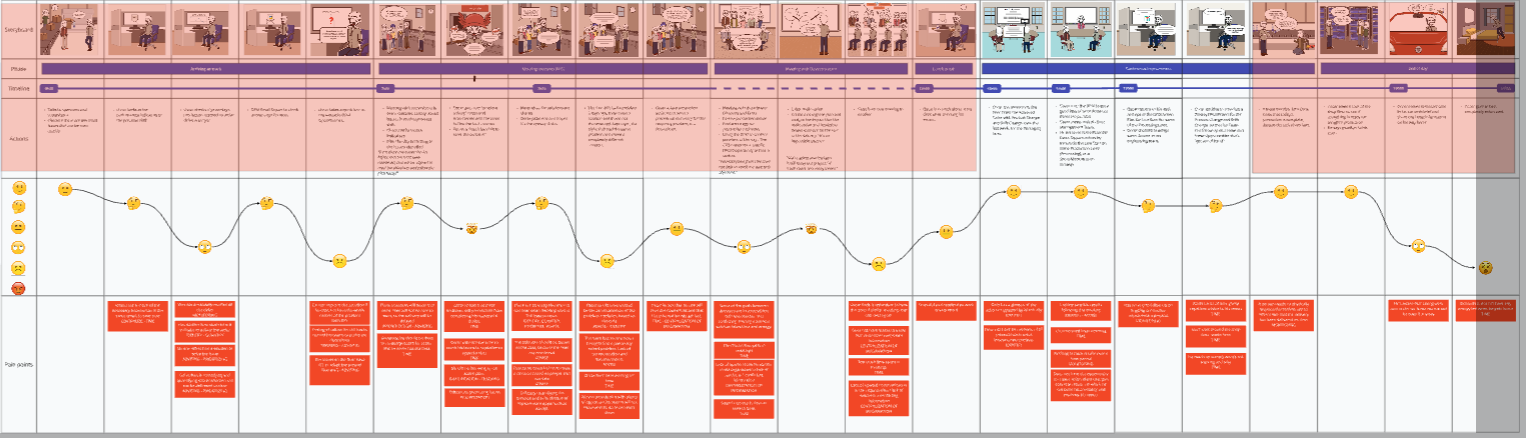
Thanks to the research and the definition of the Director of Operations persona, we were able to map out their user journey by aligning their day-to-day activities with the different interactions and touchpoints within the app. This helped us identify key friction points and define where and how the platform could be improved to better support their needs.
A DisconNected EXPERIENCE.
Inconsistent look and feel, clunky navigation between Real-Time and Analytics, limited responsiveness, and separate logins created a fragmented experience instead of a seamless, integrated platform.
Without trust, analytics becomes noise.
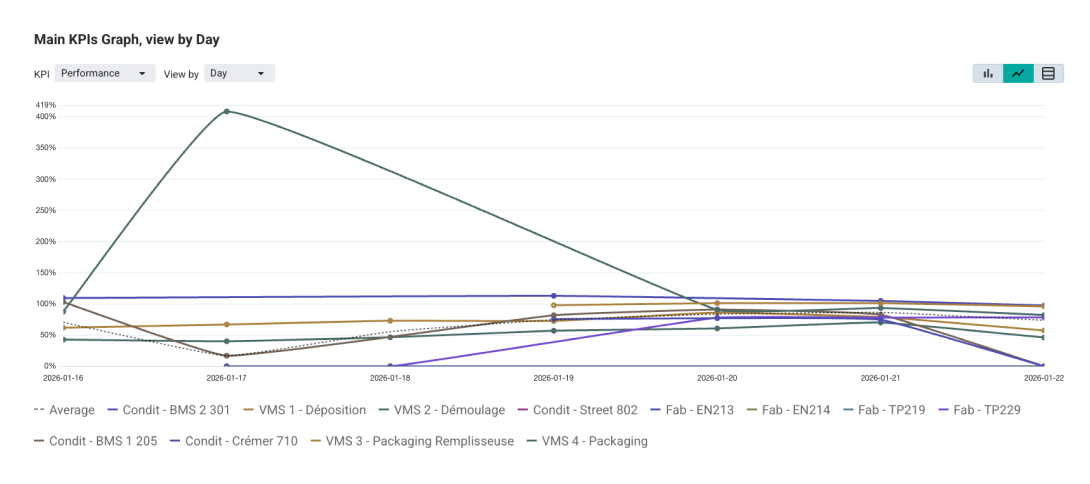
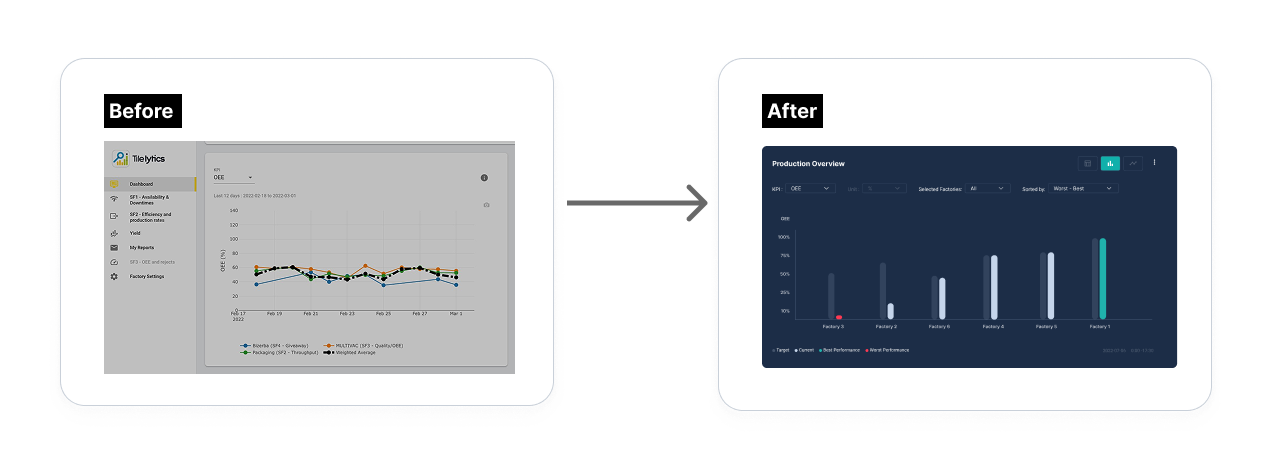
Meaningless Visualizations, line charts dominated the interface, but users didn’t need only trends — they needed prioritization. A line graph does not answer clearly which line is performing worst? How far is it from target? Is it underperforming compared to others?
Without clear visible targets and comparisons users cannot asses urgency
A line performing at 78% OEE may look “acceptable” — but if the target is 85%, it becomes a clear priority. Conversely, a lower number might be acceptable if aligned with realistic expectations.
PROBLEM DEFINITION
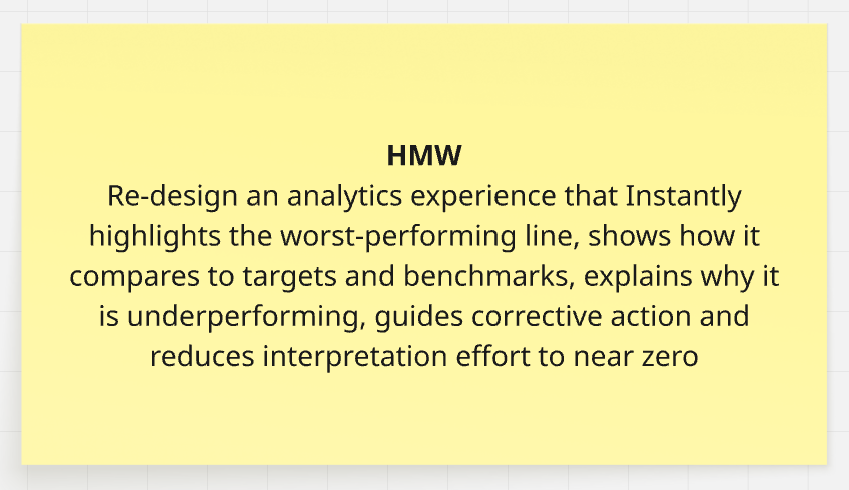
After Analyzing the data and conduct different Workshops we were able to frame different problems and agree on what we should focus first to deliver an MVP.
THE SOLUTION
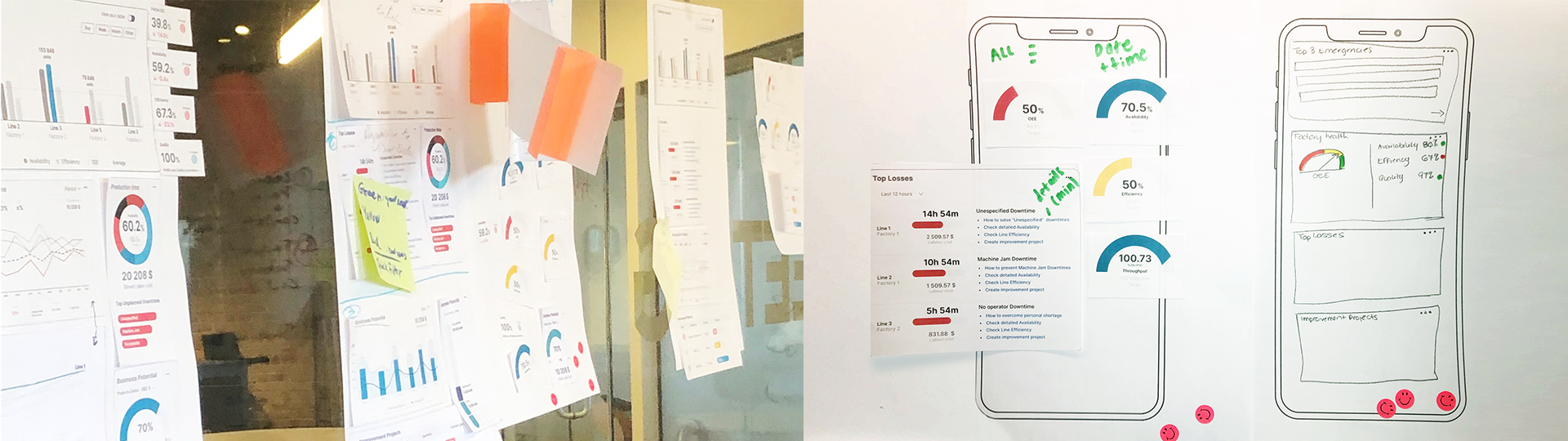
1. User Persona
Operations Director / Continuous Improvement Manager
A data-driven manufacturing leader focused on improving production efficiency, reducing downtime, and increasing line performance. Uses the Worximity Analytics platform to monitor KPIs, identify production losses, analyze trends across lines and shifts, and make faster operational decisions to drive continuous improvement.
A data-driven manufacturing leader focused on improving production efficiency, reducing downtime, and increasing line performance. Uses the Worximity Analytics platform to monitor KPIs, identify production losses, analyze trends across lines and shifts, and make faster operational decisions to drive continuous improvement.
2. From Trends to Prioritization
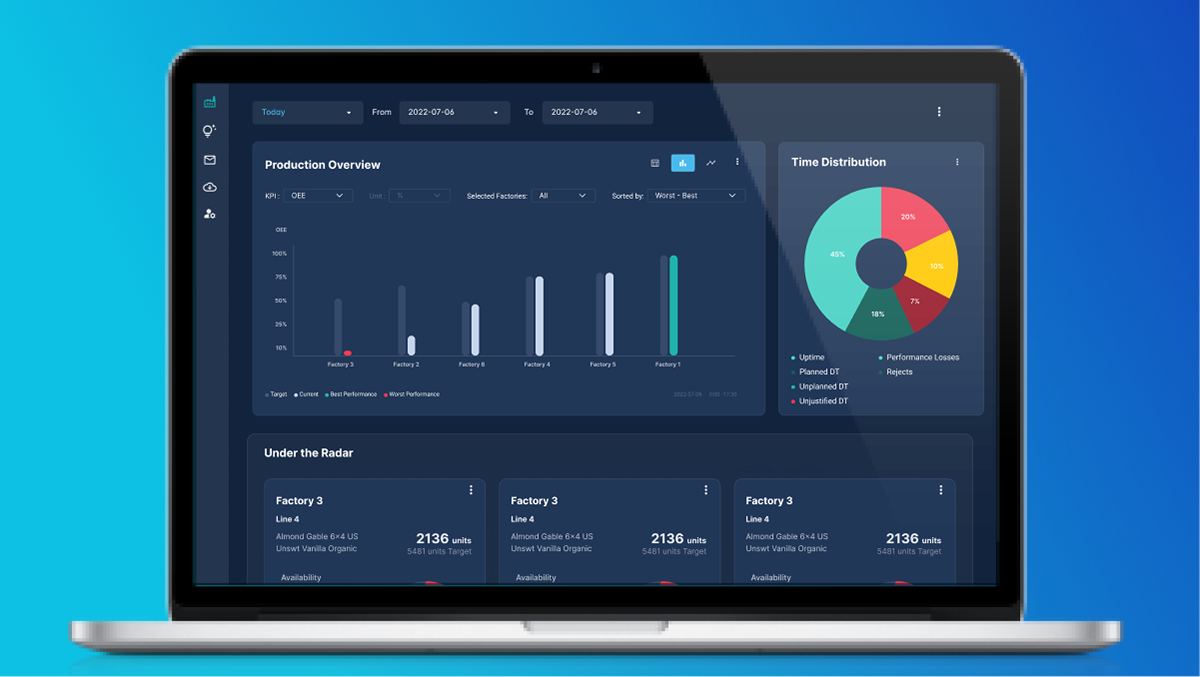
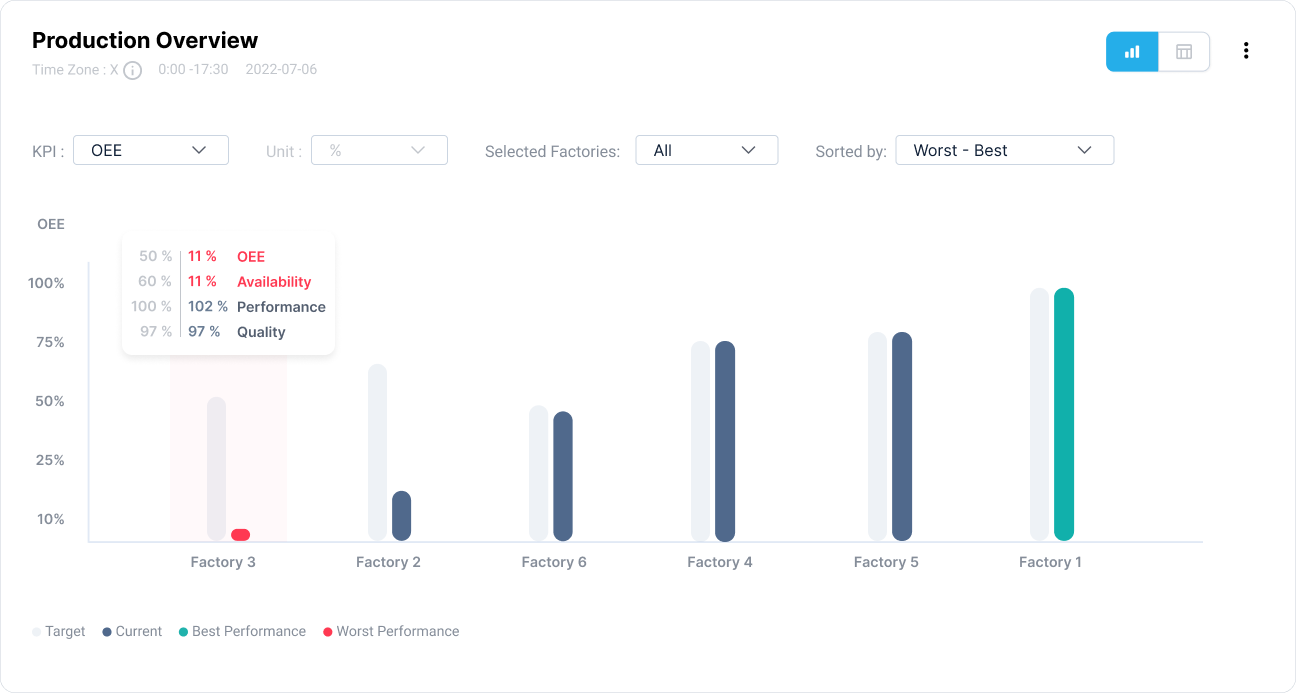
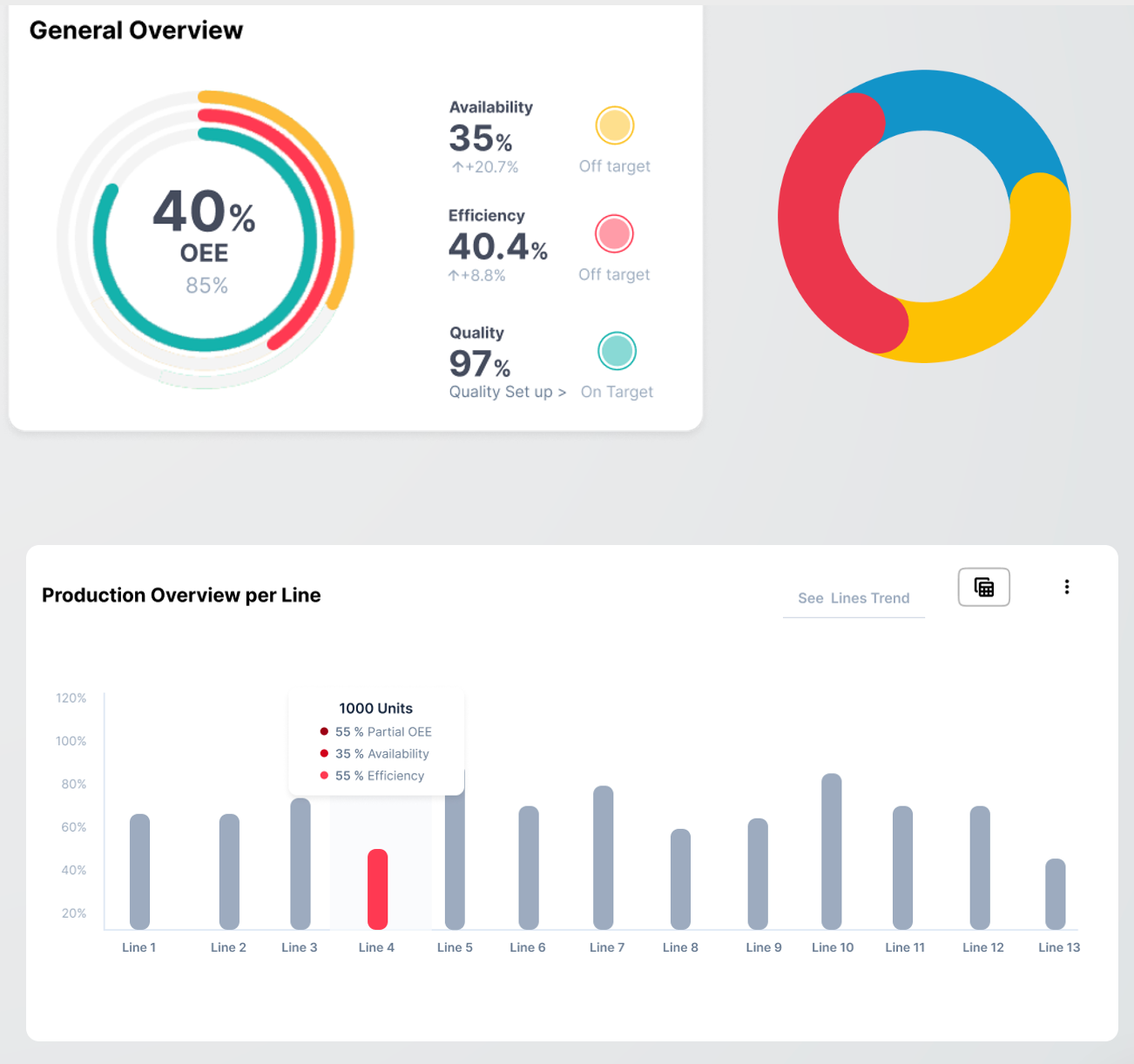
We replaced most line graphs with ordered bar charts, designed to always sort from worst → best, clearly show deviation from target. Using consistent colour coding used in real-time monitoring was applied in Analytics to reinforce familiarity and reduce cognitive load.
Now, in one glance, users can see, which line is worst, how far it is from its target, how it compares to others, where immediate action is required. No interpretation required.
3. Main KPI - OEE Component Visibility
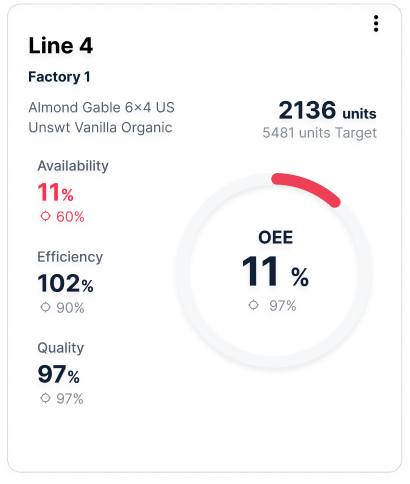
Instead of showing only aggregated OEE, users can now see at once, Availability, Performance and Quality. For each production line, alongside their respective targets. This allows them to immediately identify whether the issue is: Downtime (Availability), Speed (Performance) or Rejects (Quality). And whether each component is below benchmark.
The graphs use rounded forms to align with Worximity’s brand identity and visual language. Applying consistent rounded corners creates a more approachable, modern, and cohesive experience while reinforcing the brand’s use of soft, rounded forms across the product. This treatment also helps the data visualizations feel naturally integrated with the rest of the interface rather than appearing as separate technical elements.
4. Action-Oriented Clarity
Once the issue is identified, the user can clearly determine, Should we reduce downtime? Should we increase speed? Should we address quality issues?
Because every KPI is contextualized against its target, improvement opportunities become measurable and actionable.
5. Configurable Dashboard
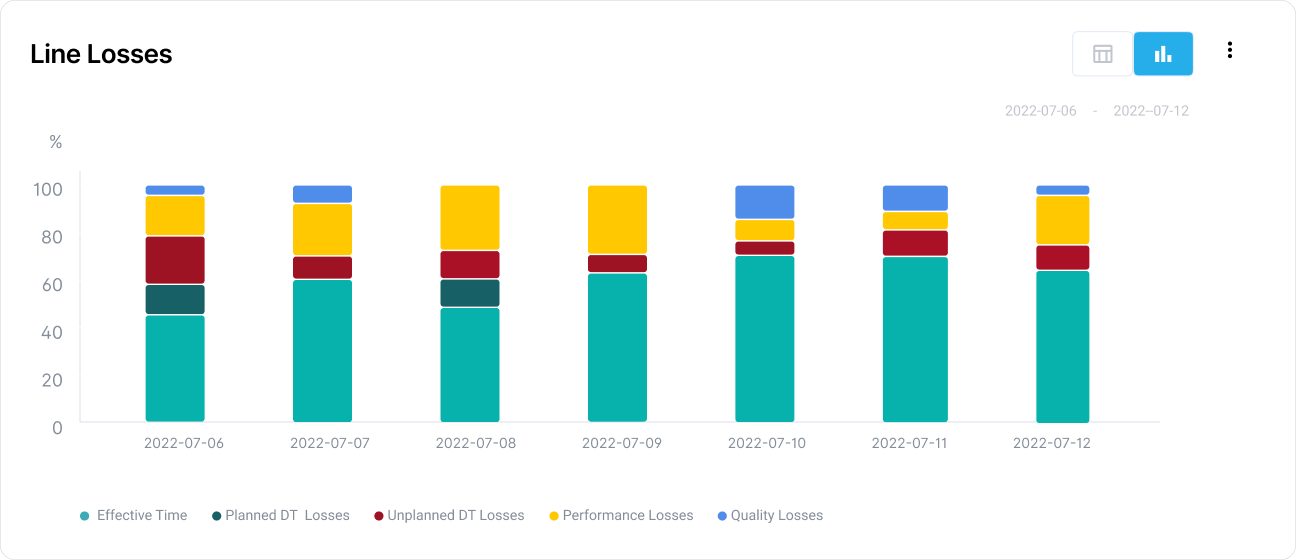
Recognizing that operational priorities vary, we introduced a configurable dashboard, users can choose which KPIs to display, adjust timeframes, compare against targets or historical benchmarks, filter by line, product, or shift. This balances standardization with flexibility while preserving clarity.
6. Product Usage Visibility
The introduction and implementation of Pendo to bring a data-driven approach to understanding how users interact with our platform. I was responsible for defining what we needed to measure, setting up the analytics and tracking, and turning user behavior data into actionable insights.
IMPACT
Increased visibility into platform usage via Onboarding process and In-app campaign after redesign, Improved trust through consistent calculations and visual logic, Clear benchmark visibility across all KPIs.
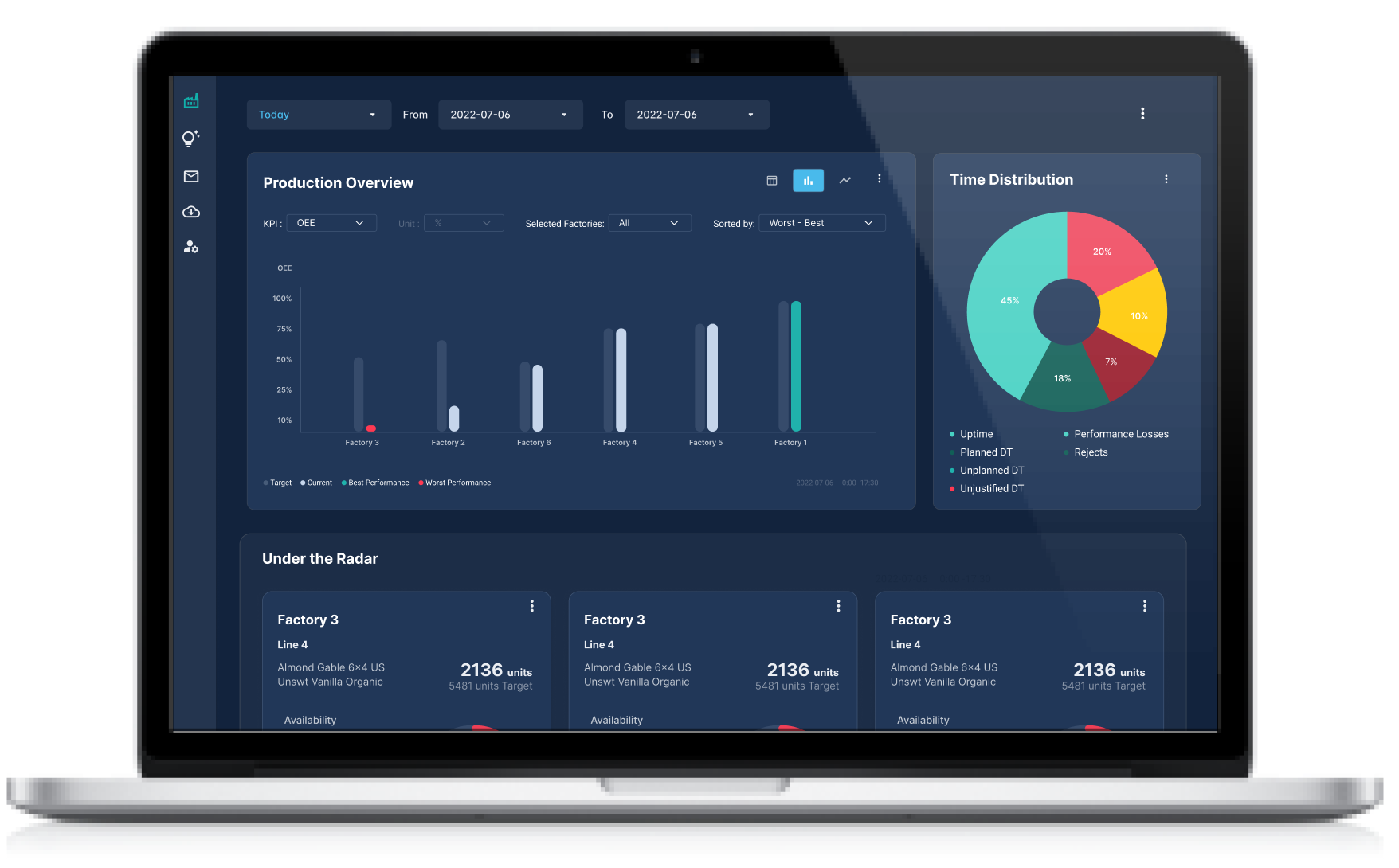
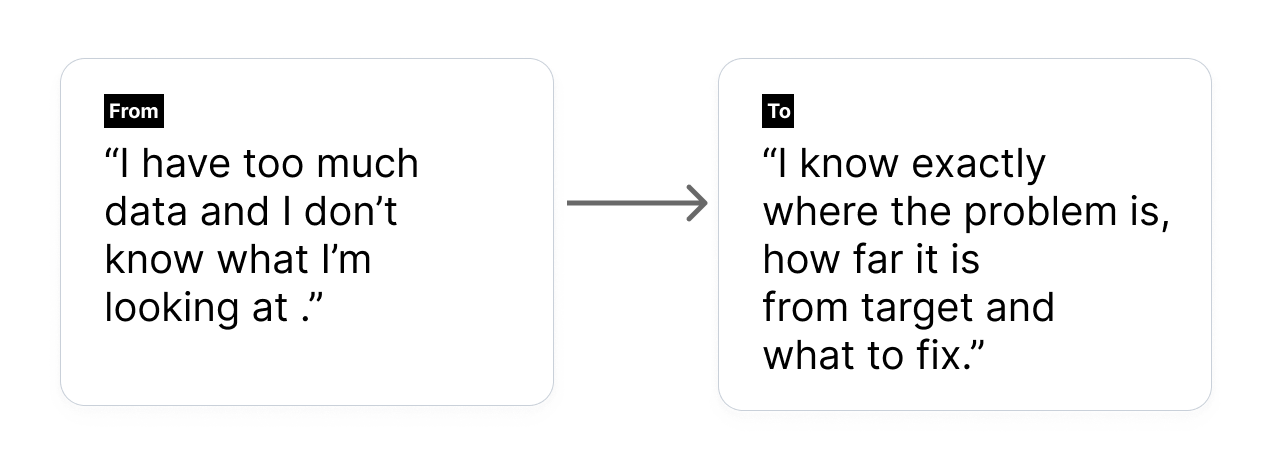
The redesigned Analytics platform empowers Manufacturing Operations to move from:
The success of the redesign was measured not only by how the interface looked, but by whether it helped users understand their data faster, take action, and integrate analytics into their daily decision-making workflows.
Adoption
Increase recurring usage of Analytics and adoption of the redesigned experience. From 1% to 100% of our Persona user.
Increase recurring usage of Analytics and adoption of the redesigned experience. From 1% to 100% of our Persona user.
Efficiency
Reduce the time required to locate, understand, and interpret key production KPIs.
Reduce the time required to locate, understand, and interpret key production KPIs.
Actionability
Increase the number of users who take a meaningful action after identifying an insight in Analytics.
Increase the number of users who take a meaningful action after identifying an insight in Analytics.
Business Impact
Increase the use of Analytics in operational reviews and QBRs, strengthening its role as a decision-making tool rather than a passive reporting interface.
Increase the use of Analytics in operational reviews and QBRs, strengthening its role as a decision-making tool rather than a passive reporting interface.
Platform Visibility
Implementing Pendo to start monitoring the platform usage. This gave Worximity, for the first time, a clear view of feature adoption, user engagement, friction points, and usage patterns, enabling us to make better-informed product decisions and prioritize improvements based on real user data rather than assumptions.
Implementing Pendo to start monitoring the platform usage. This gave Worximity, for the first time, a clear view of feature adoption, user engagement, friction points, and usage patterns, enabling us to make better-informed product decisions and prioritize improvements based on real user data rather than assumptions.
Of course this was just the beginning of many Iterations that are still on going.
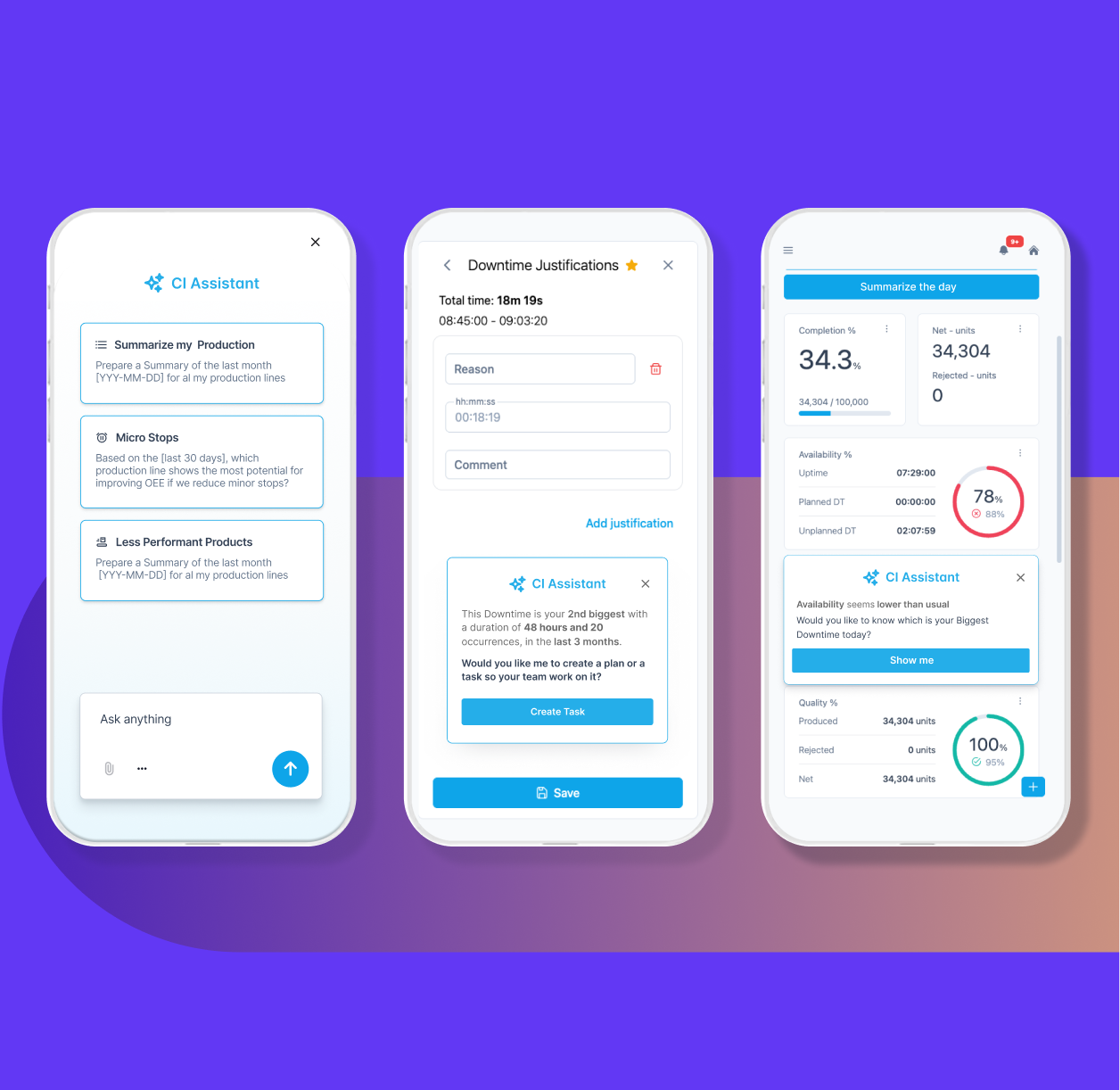
The redesign included the implementation of analytics software to monitor user engagement, alongside an awareness campaign and a review of calculations, tooltips, and supporting links to help users better understand the data and metrics.
MORE RELATED PROJECTS